
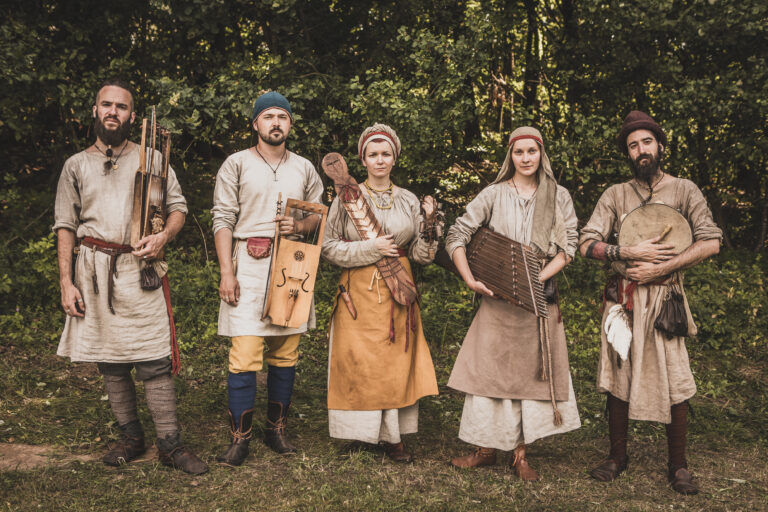
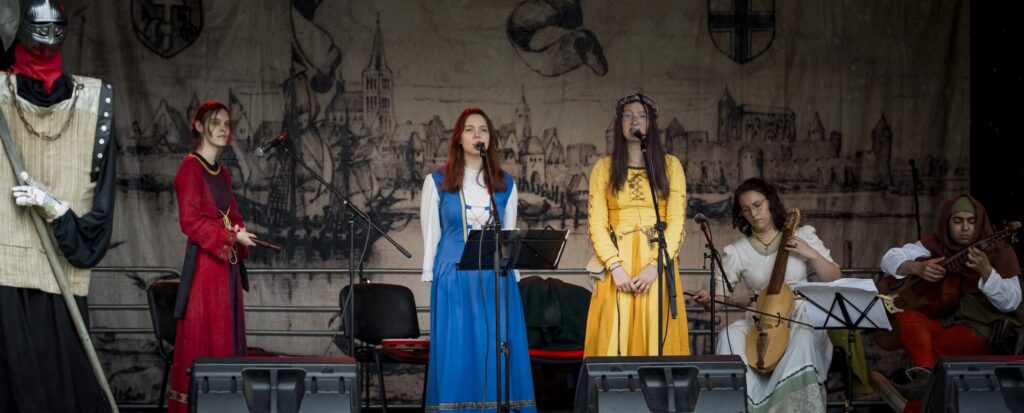
The band Daj Ognia (PL), who travel between Poland and Scandinavia, playing at village dances, at funerals and in sacred groves. Stopping at taverns that stand on the frozen Baltic Sea, creating music for both villagers and city dwellers — for dancing and contemplation. The band Daj Ognia is based in Kraków, Poland, and their music is often described as “dark folk” or “alternative folk”. Their work is born in “a village that never was”. Referring to old myths, they draw inspiration from both Polish and Scandinavian musical traditions. Using archaic instruments from these countries, the band weaves melancholic longing and wild dances into their theatrical expression. Daj Ognia’s original work brings back the fiery celebrations of ancient times.
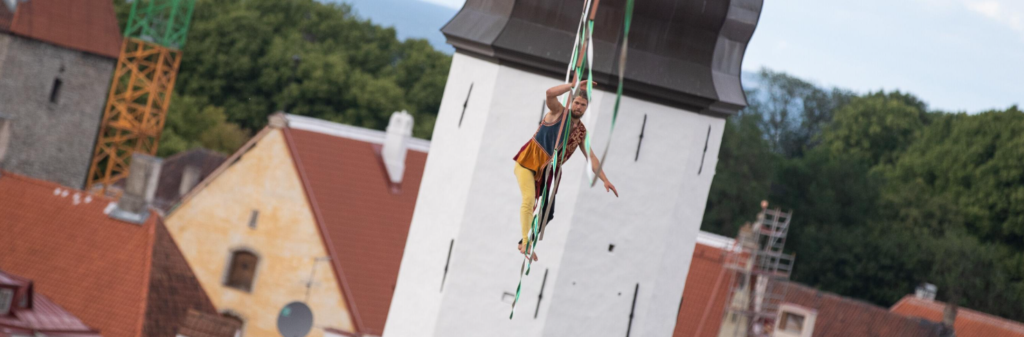
Tauri Vahesaar is a professional slackliner, stunt performer, and acrobatics coach. He is the Slackline World Champion (2015) and the defending Red Bull Slackline champion (2021). In 2015, he also served as the stunt double for Michael Fassbender in the film Assassin’s Creed. Renowned for his spectacular fire performances and breathtaking aerial acrobatics, Tauri is particularly known for hair hanging—a remarkable form of aerial performance in which the artist is suspended solely by their hair.
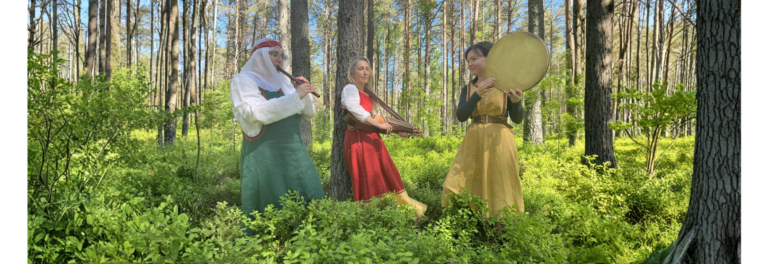
The Prunus Armeniaca ensemble, consisting of Margarita Voskanyan, Liis Kibuspuu and Ingrid Hanst, performs Armenian and European early music on historical instruments. The instruments include the Armenian flute shvi and the hand drum dap and the large dhol, as well as the Swedish dulcimer, the medieval šalmei and flutes and finger instruments of various nations. The performance will feature instrumental pieces with a dance-like character, in which East and West are intertwined.
Saltatriculi is a historical dance ensemble from Tartu devoted to recreating dances recorded in period dance manuals and descriptions, spanning the late Middle Ages through the Baroque era. The ensemble’s name, Saltatriculi, is the diminutive of the Latin saltatores and may be translated as “little dancers.”
For this year’s Medieval Days, Saltatriculi presents two distinct programmes: one featuring dances of the Italian Early Renaissance (15th century), and the other showcasing dances from the High Renaissance (the first half of the 16th century). It is entirely possible that similar dances were once performed in medieval Tallinn before the Livonian War, for the merchants of the Hanseatic League travelled widely, and German merchants in particular are known to have been well acquainted with the fashionable dances of Renaissance Italy.
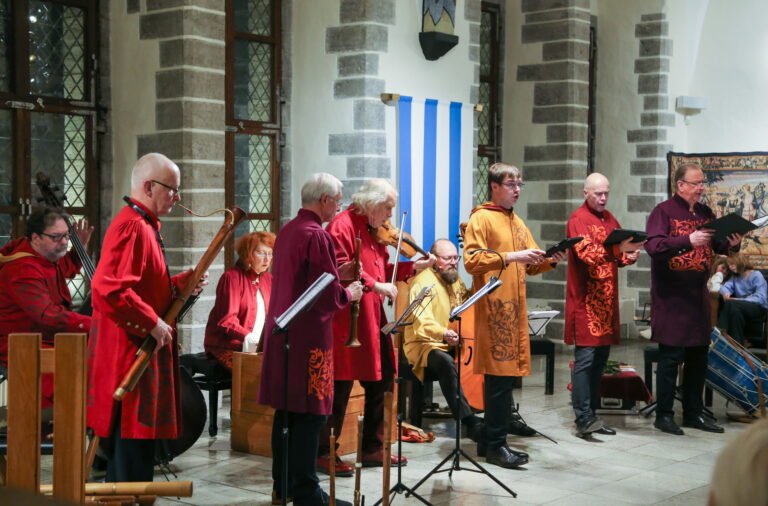
Rondellus is one of Estonia’s most distinctive early music ensembles, celebrated both for preserving the traditions of medieval music and for bringing them to life through imaginative interpretation. Rather than pursuing historical accuracy alone, the ensemble seeks to capture the very spirit of the age, creating a sound that feels at once ancient and timeless. Their performances feature historical instruments such as the hurdy-gurdy, nyckelharpa, fiddle, lute, and bagpipes, whose rich and evocative tones create a truly medieval atmosphere. Here, the human voice is more than a musical instrument—it becomes a prayer, an invocation, and a vessel for memory. At the heart of the ensemble are the Staak family together with Johanna-Maria Jaama, whose long-standing musical collaboration has given rise to Rondellus’ distinctive and unmistakable sound.
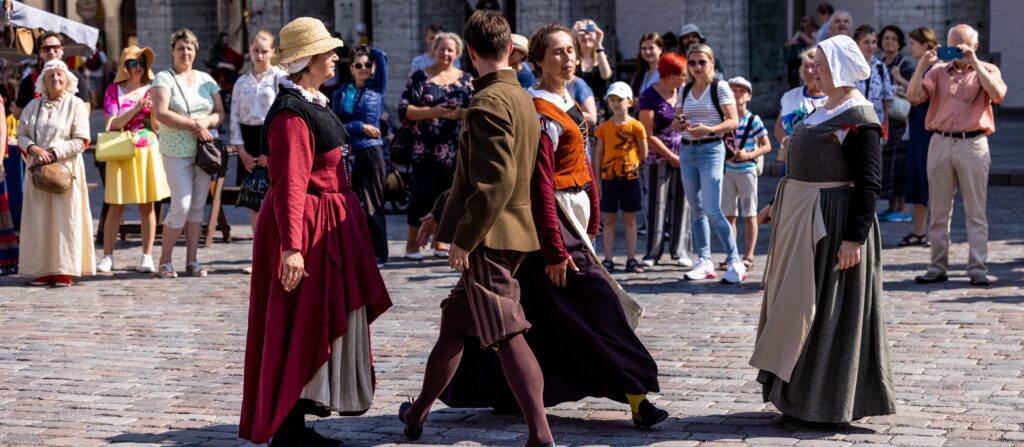
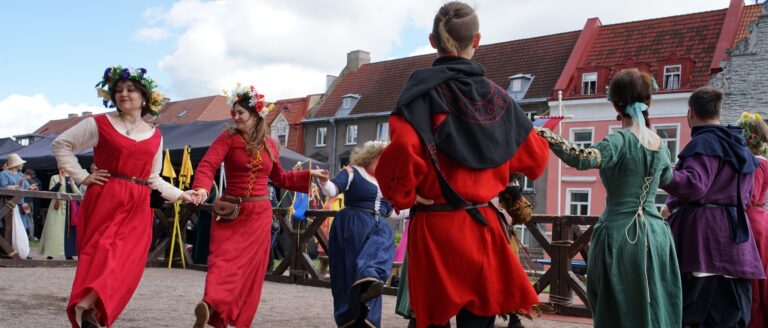
Reval Regnum is a hobby club from Tallinn that promotes LARP and medieval dance culture. The dancers perform lively medieval dances and then invite the audience to join in the dance circle.
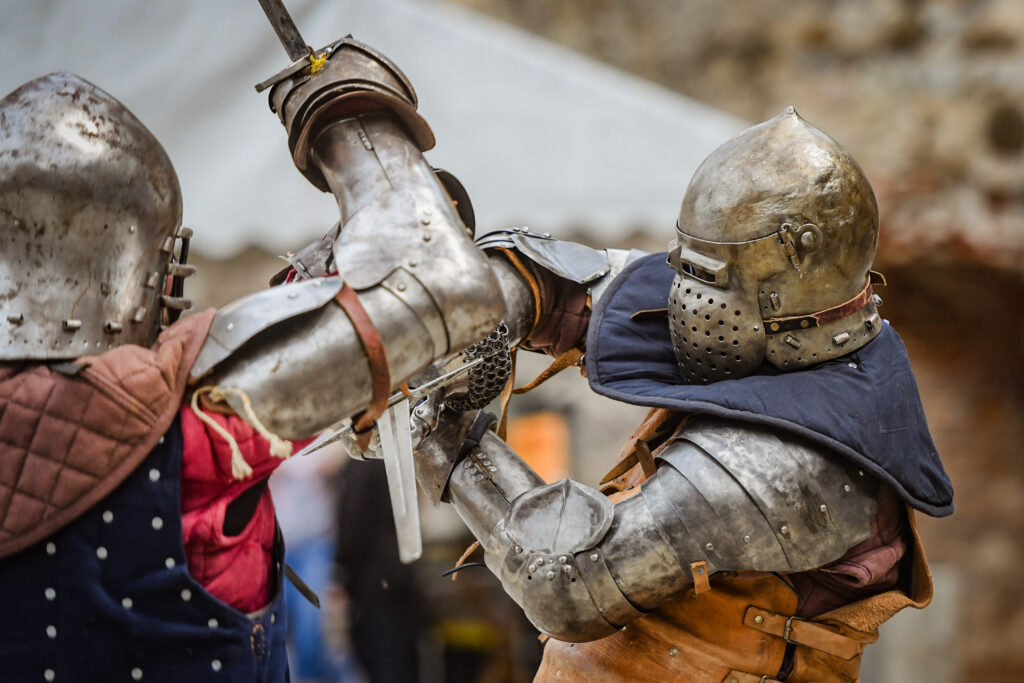
The fighters of the Chamber of Warriors uphold the cultural heritage of their ancestors. If you are interested in how our ancestors lived and what weapons they used to defend their land, you can come and listen to lectures on historical weapons and armor, watch experienced warriors fight with iron weapons, try on copies of historical weapons with your own hands, or learn to fight yourself. The fighters’ armor and weapons are based on historical models, which have been adapted to the needs of modern sports fighting. Estonian fighters also participate in the World Championship of Medieval Fighting every year. The Chamber of Warriors will give a lecture on historical weapons and fighting techniques (2 hours) – different melee weapons and how they were fought with.
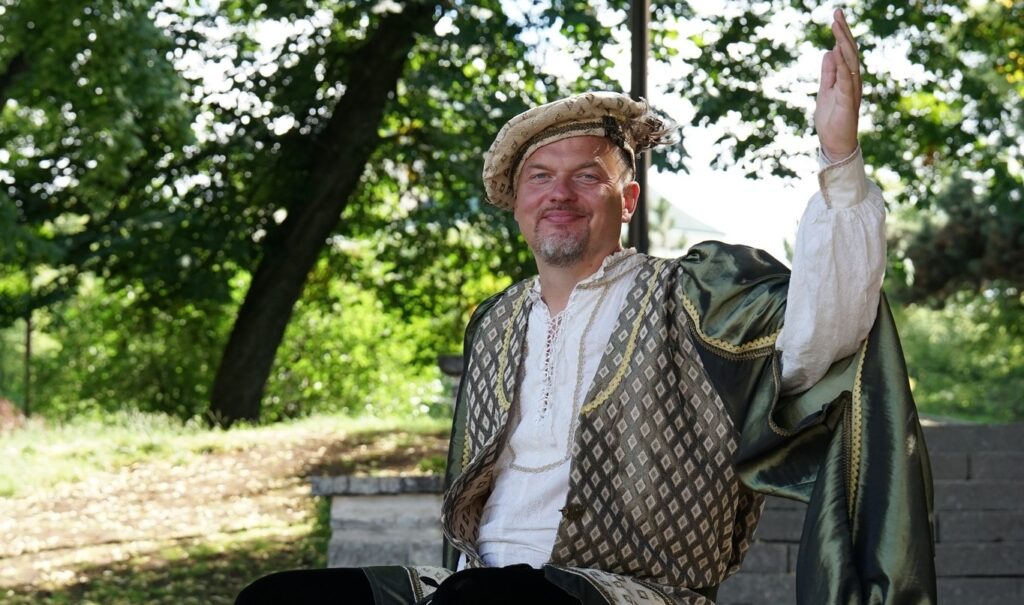
Jaak Juske—our Lord Historicus—is one of Tallinn’s best-known historians, guides, teachers, and authors. His guided walks lead visitors through the fascinating corners of the Old Town, revealing the city’s rich past through vivid stories and intriguing historical details. Juske believes that history is best experienced through engaging tales and visual examples that bring the past to life. During the Medieval Days, his tours offer a unique opportunity to discover Tallinn’s history in an entertaining and memorable way.
Health Museum
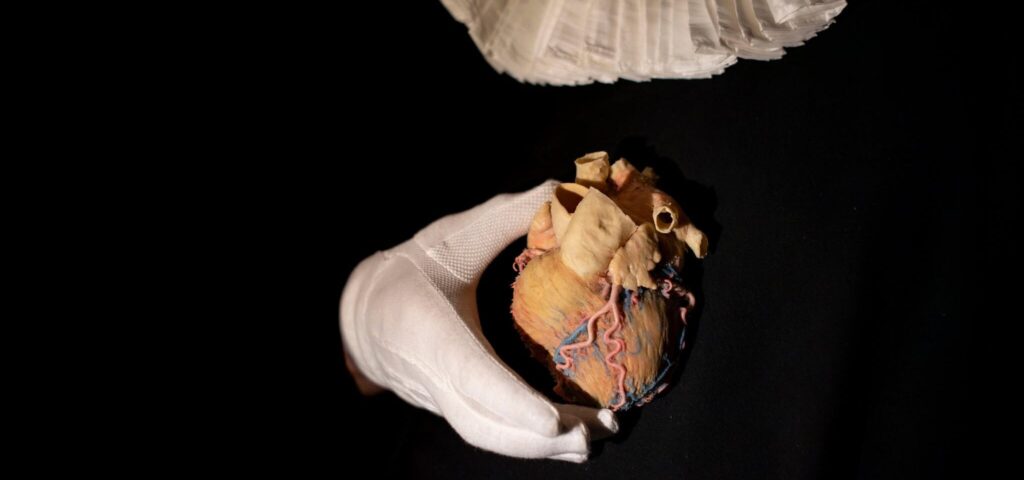
Public autopsies were popular in medieval Europe and offered the audience a rare opportunity to peek inside the human body and took medical science to a new level. In the first half of the science theatre, we recall how ancient scholars understood the human body and its functioning and see what anatomical drawings looked like.
In the second half, we will use the teaching doll Markus and plastinates from the museum collection. We will explore the shape and structure of internal organs, what they do and what they are needed for. A touch of humor, exciting stories and new knowledge – this is “Public Autopsy” at the Health Museum. The spectacle will take place in the cozy circular auditorium on the fourth floor. (in Estonian). With a ticket for the event, you can independently explore the permanent exhibition of the Estonian Health Museum “Openly About Your Body” and the annual exhibition “Goodbye, Youth” on the same day. The museum is open from 10 am to 6 pm.
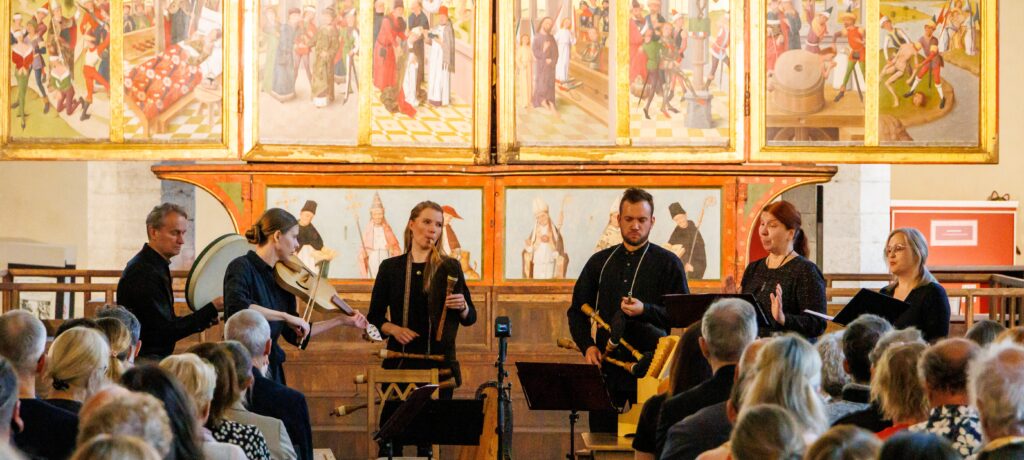
Hortus Musicus is a distinctive musical ensemble founded by a group of enthusiasts who, despite the isolation of the Soviet era, joined their energies and forged their own path with only limited support from outside. A central role in shaping the ensemble’s vision has been played by Andres Mustonen, whose refusal to accept both the constraints of the prevailing regime and the rigid conventions of musical interpretation led the group on a journey into the then little-known world of pre-Bach music. The performances of Hortus Musicus are characterised by a creative and unprejudiced approach to music that, while distant from us in time, remains close in spirit and meaning. Over more than fifty years of activity, Hortus Musicus has performed in most European countries, as well as in the United States, Japan, Israel, and across the vast territories of the former Soviet Union. The ensemble has also recorded approximately thirty-five programmes on disc.
Musica Silentii is an ensemble that brings the magic of medieval music to listeners. People often talk about the “Dark Ages”, but we want to break this myth – the Middle Ages were rich in culture and sounds. We play music that is true to the era, adding nuances from the modern world of sound to create a unique and engaging musical experience.
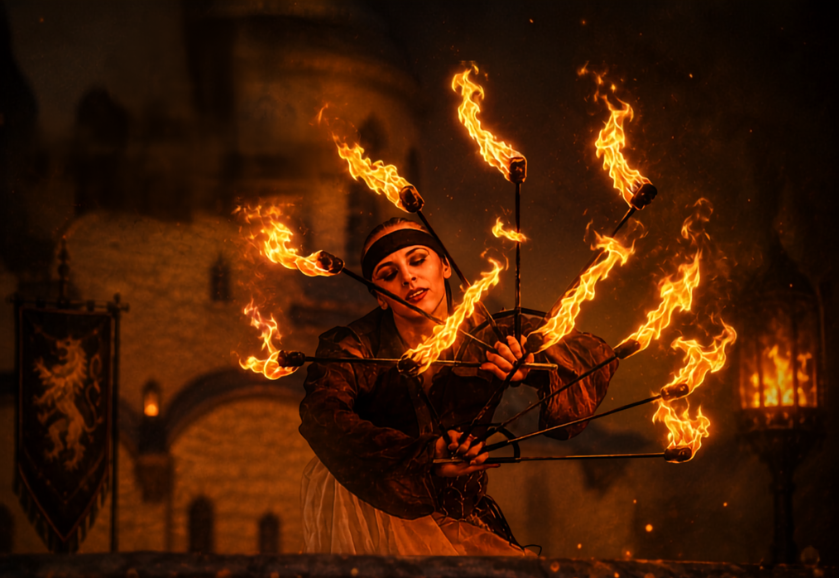
Fire Theatre Kelfirius Since 2004, Kelfirius has brought together creative and energetic people from many different fields to create unforgettable performances and spectacular shows featuring fire and special effects. Based primarily in Tallinn, Kelfirius holds a special fondness for the Old Town and is well known for productions inspired by medieval and historical themes. This summer, they will once again delight visitors to the Medieval Days with their vibrant and dazzling displays of fire dance.
The Wise Virgins Ensemble comprises Ester Alperten, Eike Kirikal, Clelia Piirsoo, Maria Staak, and Marie Saame. During the Medieval Days, the ensemble will present the 30-minute concert Flos Regalis – The Royal Flower at the Ukrainian Greek Catholic Church of the Three-Handed Mother of God. The programme explores floral imagery in hymns dedicated to the Virgin Mary, featuring sacred music from the 12th to the 14th centuries.
Ajateater was founded in 2010. The company draws inspiration from historical events, remarkable figures, stories, and source materials that raise questions, spark imagination, and invite audiences to see the past from new perspectives.
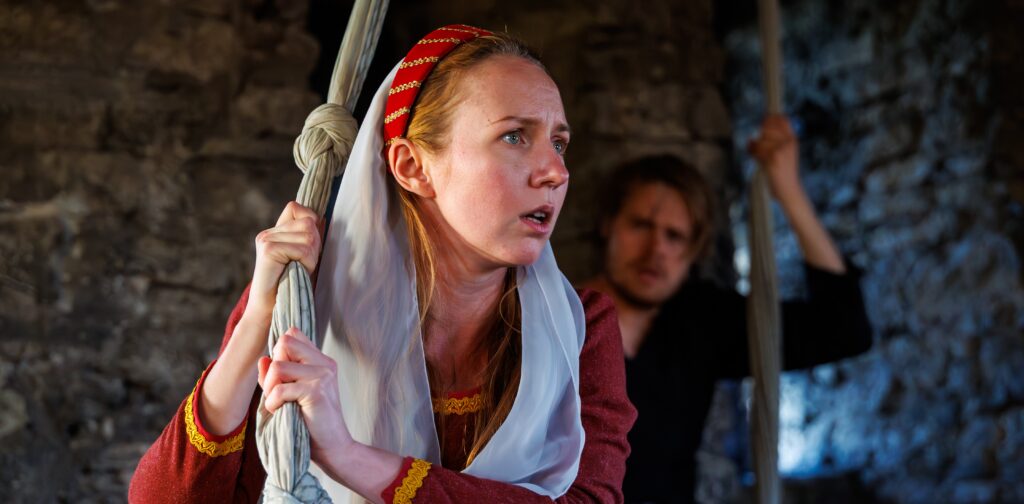
During the Medieval Days, Ajateater presents the immersive historical performance “Outlaws and Lovers of the City Wall — Four Glimpses into the Shadows of History” (in Estonian). In this production, the journey is not merely an imagined passage into the past—the audience physically travels through history together with the actors, moving along the towers of Tallinn’s city wall, where each new story unfolds. Please note that the performance involves climbing at least 125 steep steps during the course of the experience.
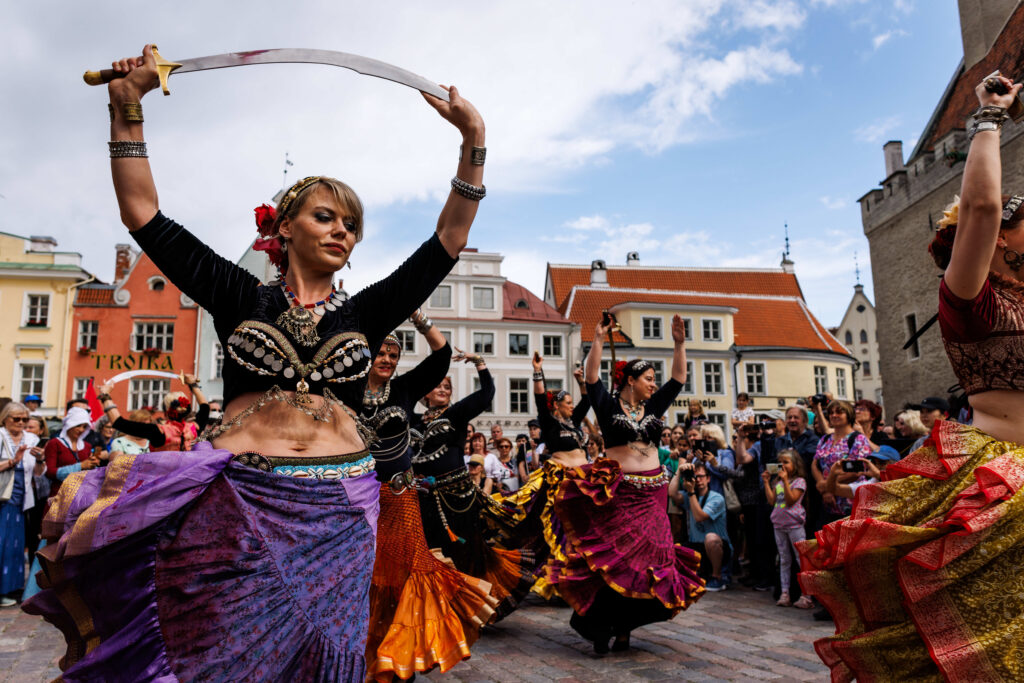
Traveling Caravan – Müstika Studio and Oriental Dancers
A proper medieval celebration cannot be complete without oriental dancers, who bring dances and songs from different cultures, including the wandering dancers Roma or Gypsies, to the audience. The dance performance has been put together by Berit Aicha Kalling from Müstika Studio.
Come and enjoy the dances with tambourines, veils and swords.
Lonkava Hundi Koda (The Lame Wolf Guild) brings together history enthusiasts dedicated to rediscovering and reviving the knowledge and skills of the past. Focusing on the 14th century, the group is a historical re-enactment society that shares its passion for medieval life with the wider public through practical lectures, hands-on workshops, and visually engaging demonstrations.
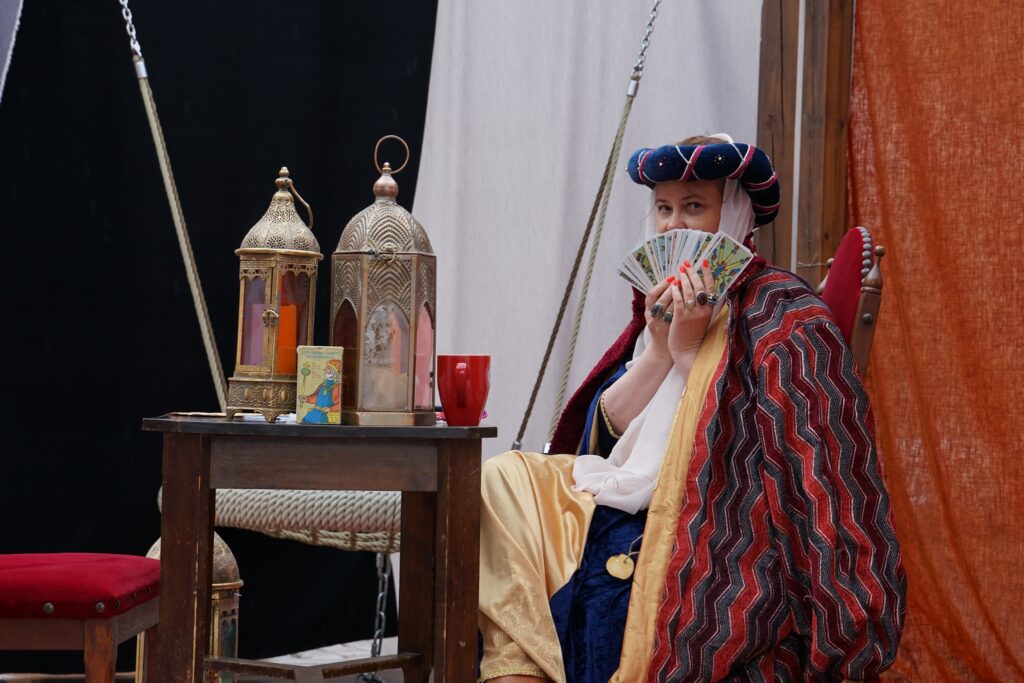
Medieval card divination.
Tarot cards arrived in Europe in the Middle Ages and went through an exciting development there. During the fairs of the Middle Ages, card divination offers the opportunity to have cards laid out for you and ask questions about tarot and card magic.
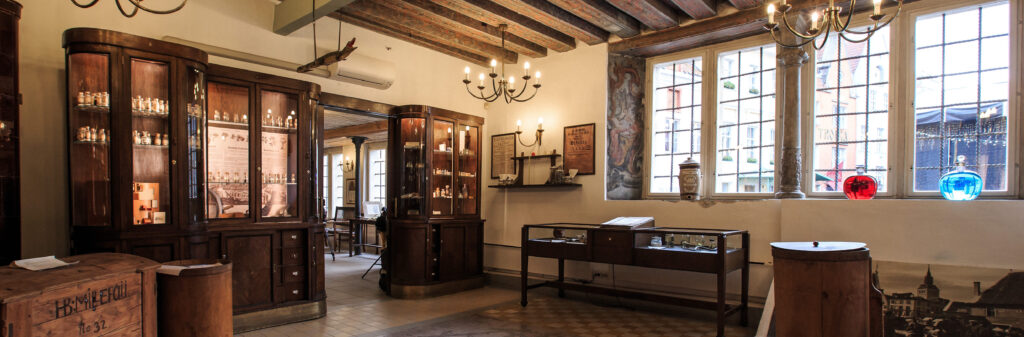
Tallinn Town Hall Pharmacy (Raeapteek) is the oldest pharmacy in Europe to have operated continuously in the same premises. Although its exact founding date is unknown, records in the Tallinn Town Council’s account book show that the pharmacy already had its third owner by 1422. By that reckoning, this venerable institution is a mere 605 years young.
During the Medieval Days, visitors are invited to take part in a free history lesson at the pharmacy museum and the “Unicorn Horn Powder” Workshop, where they can discover the curious remedies and beliefs of the medieval apothecary.
Tallinn Town Hall is the oldest and only surviving Gothic town hall in Northern Europe. For centuries, it has been a symbol of European civic power and urban self-government.
Already in the middle of the 13th century, the King of Denmark granted Tallinn the Lübeck city law, under which the city was governed by a council elected from among the Hanseatic merchants. As a symbol of its independent civic authority, the council erected a dignified town hall beside the marketplace.
As a partner of the Medieval Days, Tallinn Town Hall opens its historic halls and tower for townspeople and visitors to explore. The Town Hall will also host a concert by the early music ensemble Hortus Musicus on Friday, 10 July.
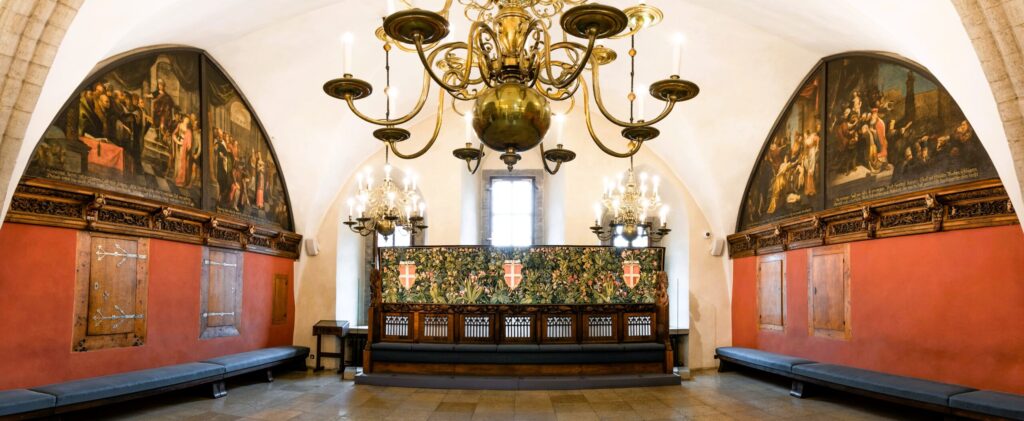
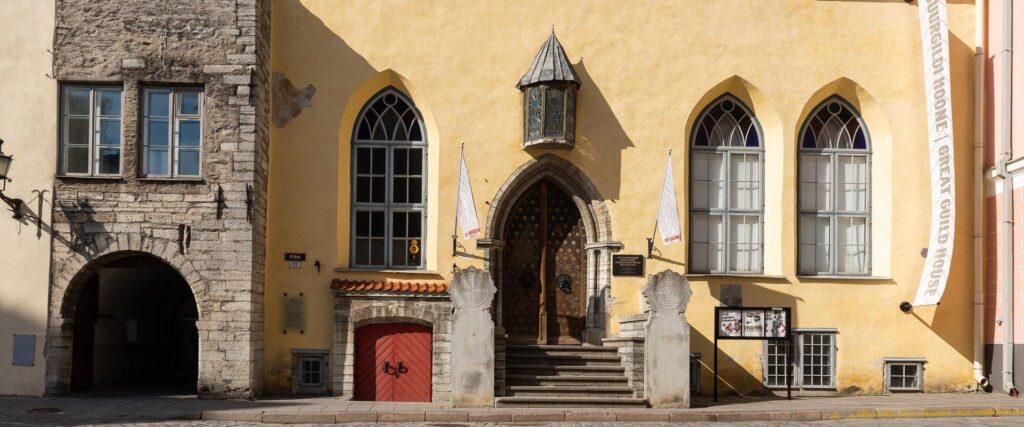
The magnificent Great Guild Hall, with a history spanning more than 600 years, has for centuries been one of the city’s best-known venues for cultural events and celebrations. Over the years, it has housed a cinema and even a wine cellar.
Today, the historic building is one of the homes of the Estonian History Museum. As part of the Medieval Days, the Great Guild Hall will host several curator-led tours of the exhibition “The Glory of the Hanseatic League: How Wealth Was Created in the Middle Ages”.
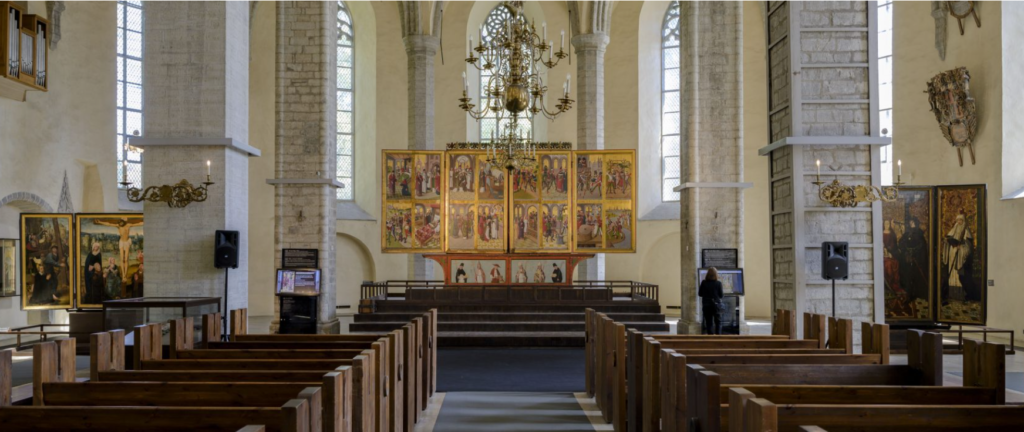
Niguliste Museum preserves, studies, and presents medieval and early modern ecclesiastical art. Located in a remarkable example of Tallinn’s sacred architecture within the UNESCO World Heritage-listed Old Town, the museum offers visitors the opportunity to discover rare treasures of medieval art.
The museum is housed in St. Nicholas’ Church, founded in the 13th century, and is one of the few museums in Northern Europe to present church art within its original historical context. Among its most celebrated works are late medieval altarpieces from Northern Germany and the Netherlands, as well as Bernt Notke’s “Dance of Death” from the late 15th century. Of particular value is the collection of ecclesiastical and guild silver, including treasures belonging to churches, guilds, craft brotherhoods, and the Brotherhood of Blackheads, displayed in the Silver Chamber.
As part of the Medieval Days, Niguliste Museum will host two fascinating lectures.
Olde Hansa – Partner of the Medieval Days
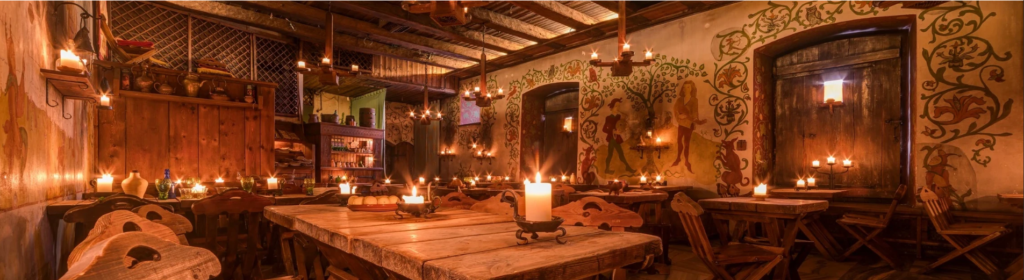
Olde Hansa is the House of Wealthy Merchants, where the traditions and customs of the Hanseatic era are kept alive. Everything you see, hear, taste, and touch is inspired by the customs of the 15th century, transporting guests back in time through the care and hospitality of its devoted servants.
The restaurant’s aim is to offer the finest delights of medieval cuisine, accompanied by beverages crafted according to historical inspiration. Housed in a magnificent three-storey building with seating for 300 guests, Olde Hansa is a place where every mural, piece of furniture, and carefully chosen detail tells a story, creating an atmosphere of remarkable medieval authenticity.
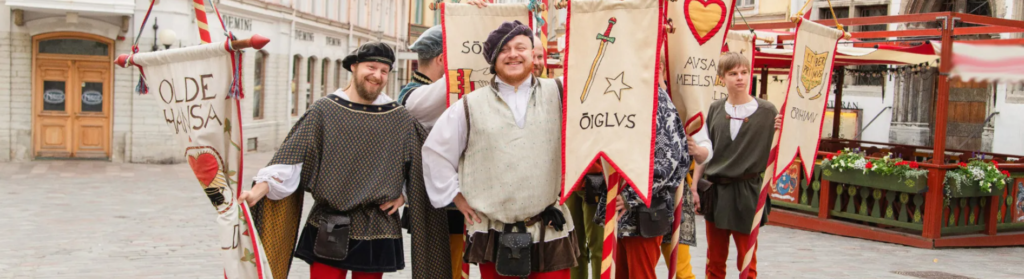
During the days of the Medieval Days, Tallinn can experience a flourishing Hanseatic atmosphere – a medieval market with traders and workshops takes place on the Town Hall Square, and on St Nicholas’ Hill you will find a village of craftsmen and a children’s area with workshops, a knight’s school and many other exciting things.